
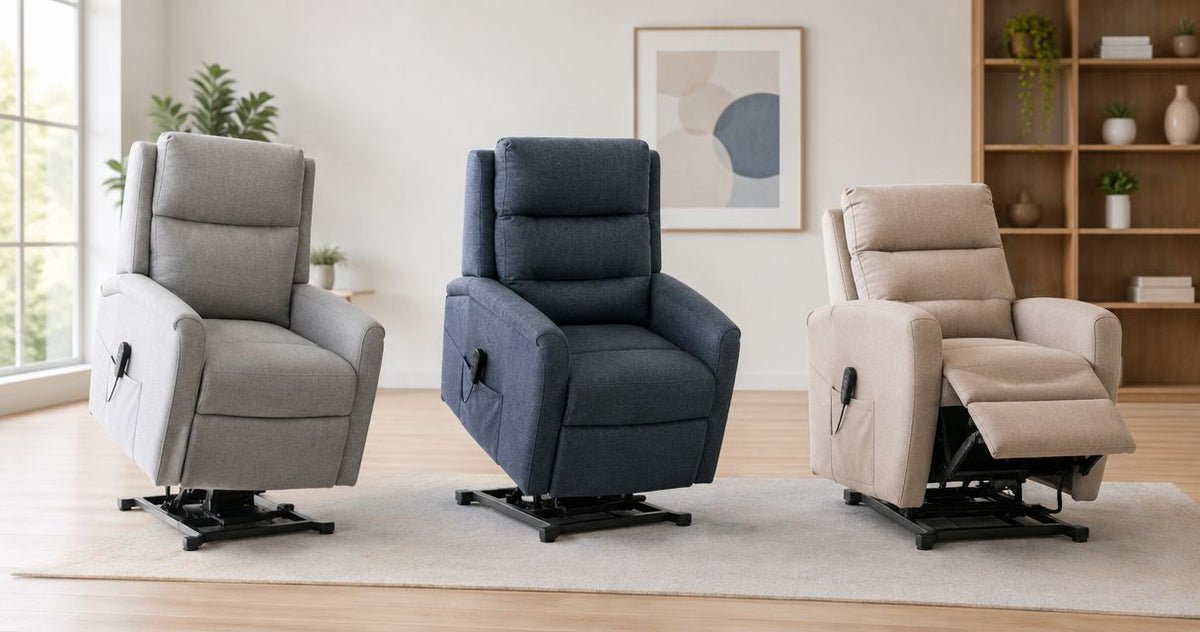
Lift chairs are sold in three recline styles: 2-position, 3-position, and infinite-position. Picking the wrong one means paying for motors you never use, or getting stuck without the exact recline angle a bad back or swollen leg actually needs.
- 2-position lift chairs move between upright and one fixed recline angle — the simplest, lowest-maintenance option for occasional use.
- 3-position lift chairs add a middle TV/reading stop and remain the most common configuration sold in 2026.
- Infinite-position (lay-flat) lift chairs, like the SleepingTitan Origin Lay Flat Lift Chair, stop anywhere in the recline path and lay flat for sleep or swelling relief.
- Infinite-position models run on two to four motors and do more jobs, but they need more floor space and a longer learning curve on the remote.
Why this matters
The position count on a lift chair is not a marketing label — it's the mechanism. A 2-position chair has one recline stop built into the frame. A 3-position chair adds a second stop. An infinite-position chair replaces fixed stops with a motor that holds any angle you release the remote at, including fully flat.
That difference decides whether the chair works for a nap, for a full night's sleep, or for managing edema and leg swelling. Buying by price alone in 2026, without checking which category you're in, is the single most common lift chair return reason retailers report.
Browse Edward Creation's full lift chair catalog before you commit — recline type matters more than color or fabric when you're shopping for daily use.
At a glance: 2-position vs 3-position vs infinite-position
| Dimension | 2-Position | 3-Position | Infinite-Position |
|---|---|---|---|
| Recline stops | 1 fixed angle | 2 fixed angles | Any angle, including flat |
| Motors | Single motor | Single or dual motor | Dual to quad motor |
| Best for | Occasional sitting, tight budgets | Daily TV, reading, casual napping | Sleeping, edema, post-surgery recovery |
| Floor space needed | Least | Moderate | Most (wall-hugger models reduce this) |
| Learning curve | Lowest | Low | Moderate — more remote buttons |
| Pricing model | Lowest entry cost | Mid-range | Highest, more moving parts |
| Standout feature | Simplicity | Balance of cost and function | Full lay-flat range |
Infinite-position wins on recline range (by a lot)
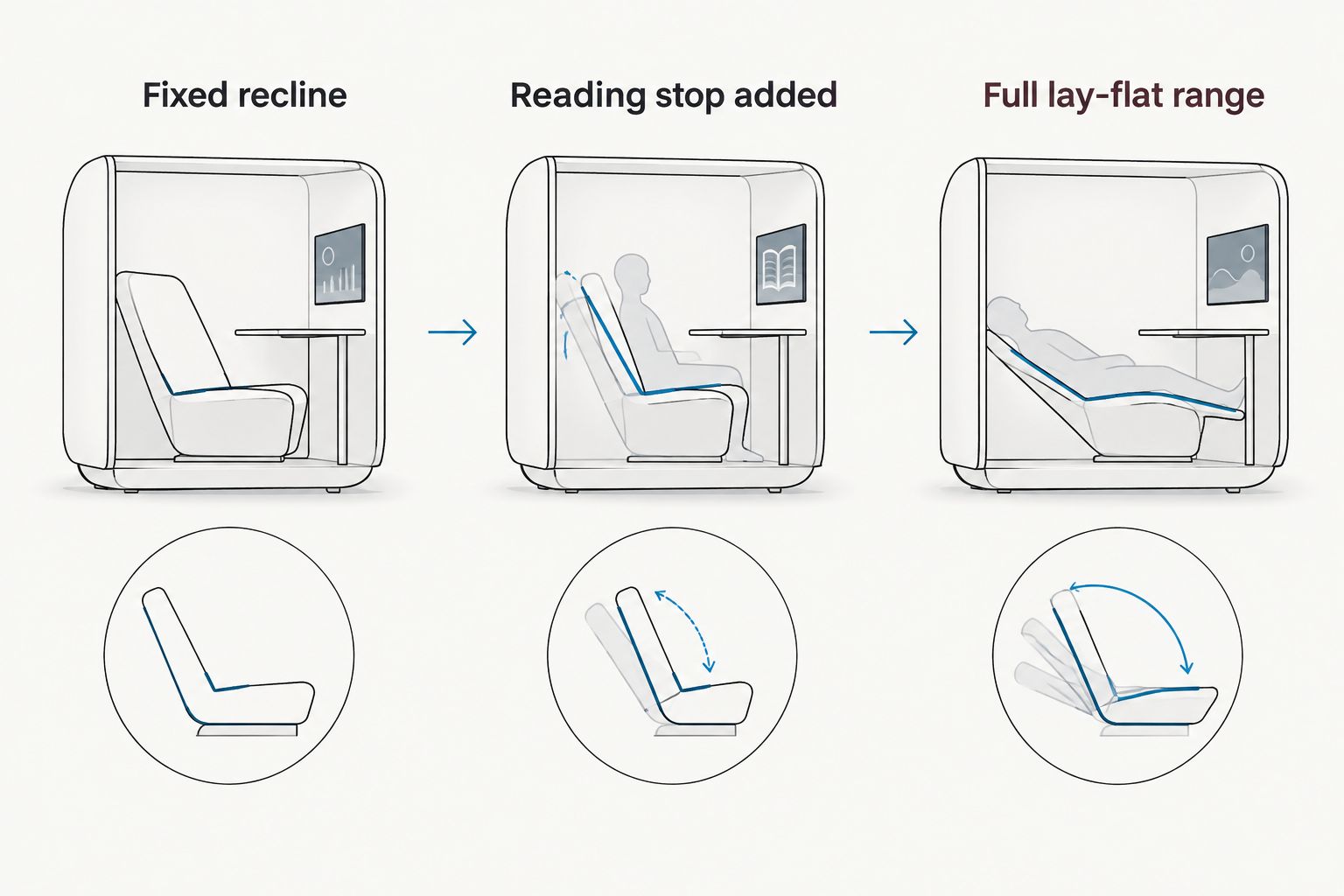
A 2-position chair gives you upright and one recline angle. A 3-position chair adds a middle stop. An infinite-position chair holds any angle in between, which is the entire point of a lay-flat model.
Chairs like the SleepingTitan Origin Lay Flat Lift Chair use dual motors to let the backrest and footrest move independently across the full range, not just jump between two or three preset stops. If you need a specific angle for a bad hip or a swollen ankle, only infinite-position delivers it.
2-position wins on simplicity and upkeep
Fewer moving parts means less to service. A single-motor, 2-position chair has one recline joint and one motor to maintain, versus two to four motors on a quad-motor infinite-position chair.
For a caregiver setting up a chair for a parent who only needs to sit up and lean back occasionally, that simplicity is a real advantage, not a compromise. 2-position is the right call when the chair's job is basic seating, not medical positioning.
3-position is the safest first-time buy
Most first-time lift chair buyers land on 3-position because it covers upright, a mid-recline TV/reading angle, and a deeper recline — without the extra motors and remote complexity of an infinite-position chair. It's the configuration that shows up most often in general lift chair listings in 2026 because it fits the widest range of daily habits.
If you're not managing a specific medical condition and just want a comfortable everyday chair that lifts you to standing, 3-position covers 80% of daily use cases without over-buying.
Both 2-position and 3-position tie on wall clearance
Neither a 2-position nor a standard 3-position chair needs the extra recline arc that lay-flat models require. Both can sit closer to a wall in a small living room or apartment.
Infinite-position lay-flat chairs need more clearance behind the chair unless you choose a wall-hugger design built to reduce that gap. If floor space is the deciding factor, this is a genuine tie between the two simpler categories — neither wins over the other.
Infinite-position wins for sleep, edema, and swelling relief
This is where the extra motors earn their keep. A chair that only reaches a fixed 3-position recline can't get a user's legs elevated above heart level for edema management, and it can't lay flat for a full night's sleep after surgery.
Infinite-position and lay-flat chairs are built specifically for that job — check lift chairs for edema and leg swelling for the positioning that matters most for circulation. If sleep or swelling management is the reason you're buying, infinite-position is not optional.
3-position and infinite-position tie on comfort add-ons
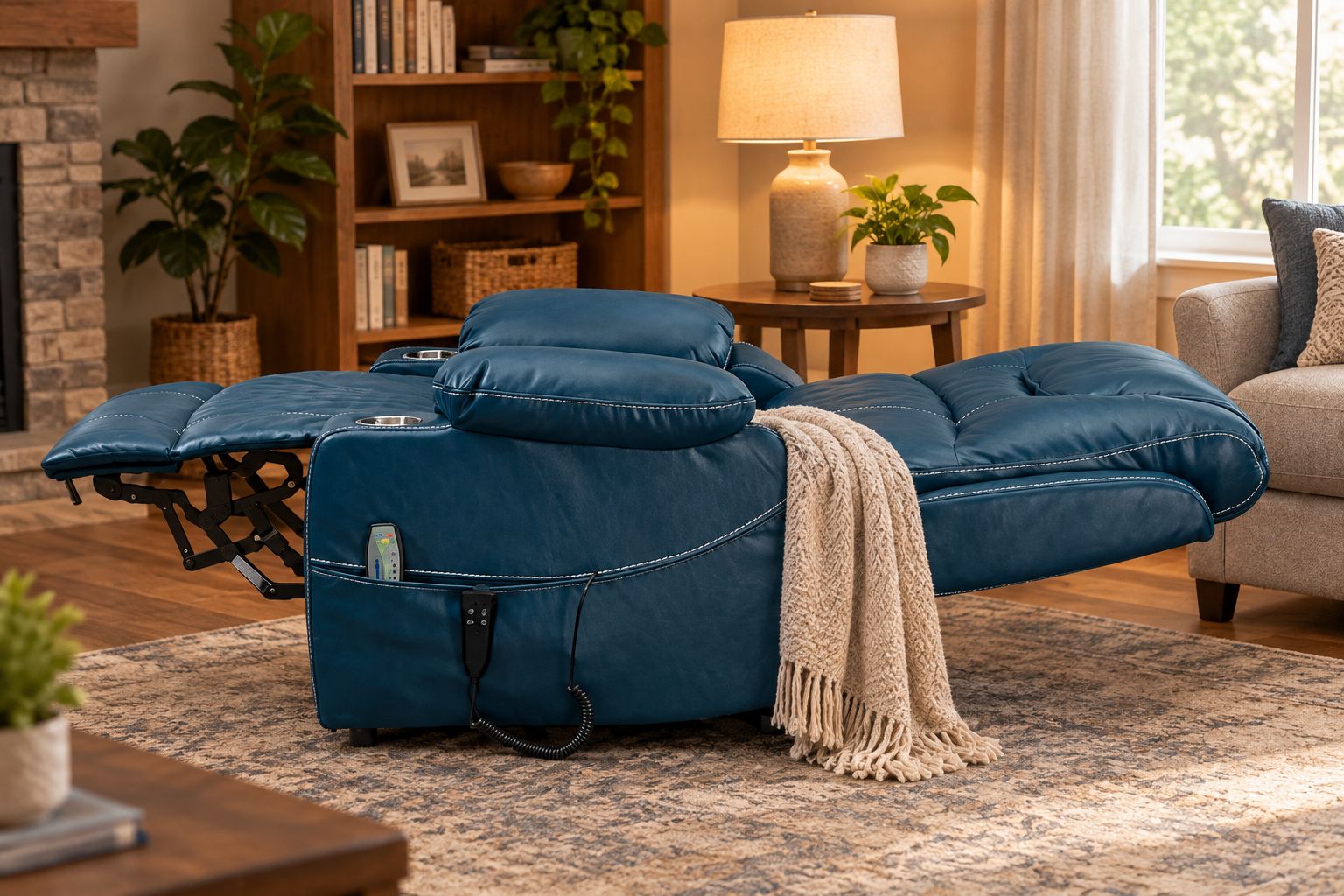
Heat, massage, and USB charging aren't locked to one recline category — they show up across 3-position and infinite-position models alike. The recline mechanism and the comfort features are sold separately, so don't assume more motors automatically means more massage points.
Check how many motors a lift chair needs before assuming motor count and comfort features move together — they often don't.
Pricing model: predictability vs capability
A 2-position chair uses the fewest parts, which keeps the mechanism straightforward and the long-term maintenance predictable. A 3-position chair adds one more moving stop without a major jump in complexity.
An infinite-position or lay-flat chair carries dual to quad motors, independent backrest and footrest control, and sometimes a battery backup — all of which add cost and complexity in exchange for capability. Check current listings on the site for what's included at each tier; the tradeoff is predictability versus range of motion, not one category being universally cheaper.
Featured infinite-position picks


Final verdict: which one to buy
Choose 2-position if you're setting up a chair for occasional afternoon sitting, want the fewest parts to maintain, and don't need a mid-recline stop — this is the right call for light, casual use in 2026.
Choose 3-position if you want one chair that handles upright conversation, TV-watching recline, and a deeper nap angle without paying for motors you won't use daily.
Choose infinite-position if you're managing edema, recovering from surgery, dealing with sleep apnea, or need the chair to double as a sleeping surface — the full lay-flat range is the entire reason this category exists.
Scorecard
| Dimension | Winner |
|---|---|
| Recline range | Infinite-position |
| Simplicity and upkeep | 2-position |
| Everyday balance | 3-position |
| Wall clearance | Tie (2-position and 3-position) |
| Sleep and medical positioning | Infinite-position |
| Comfort add-ons | Tie (3-position and infinite-position) |
FAQ
What's the difference between 2-position and 3-position lift chairs?
A 2-position lift chair has one fixed recline angle beyond upright, while a 3-position chair adds a second stop, usually a mid-recline TV or reading angle. Both use fewer motors than an infinite-position chair.
Is an infinite-position lift chair worth the extra motors?
It's worth it if you need the chair to lay flat for sleep, edema management, or post-surgery recovery. For basic daily seating, a 3-position chair usually covers the same comfort at less mechanical complexity.
Can you recline a 2-position lift chair flat?
No. A 2-position chair stops at one fixed recline angle and cannot lay flat. Only infinite-position and lay-flat models hold a full range including a flat position.
Which lift chair position is best for edema or leg swelling?
Infinite-position and lay-flat chairs are best for edema because they let you elevate the legs above heart level at any angle, not just a fixed stop. See lift chairs for edema and leg swelling for the specific positioning that helps circulation.
How many motors does a lift chair need?
A 2-position chair typically runs on one motor, a 3-position chair on one or two, and an infinite-position lay-flat chair on two to four motors for independent backrest and footrest control.
Do 3-position lift chairs work for everyday sleeping?
They can for short naps, but a fixed 3-position recline won't reach a true flat sleeping angle. If nightly sleeping in the chair is the plan, an infinite-position lay-flat model is the better fit.
What's the best lift chair for elderly parents with limited mobility?
A 3-position chair covers most daily needs for elderly users with limited mobility, while infinite-position models add value if the user also deals with swelling, sleep apnea, or recovery from a hip or knee replacement.
One last thing
The motor count on the spec sheet is the fastest way to sort these three categories at a glance in 2026: one motor usually means 2-position, one or two motors usually means 3-position, and two to four motors signals a true infinite-position lay-flat build. Check that number before checking the fabric swatch.