
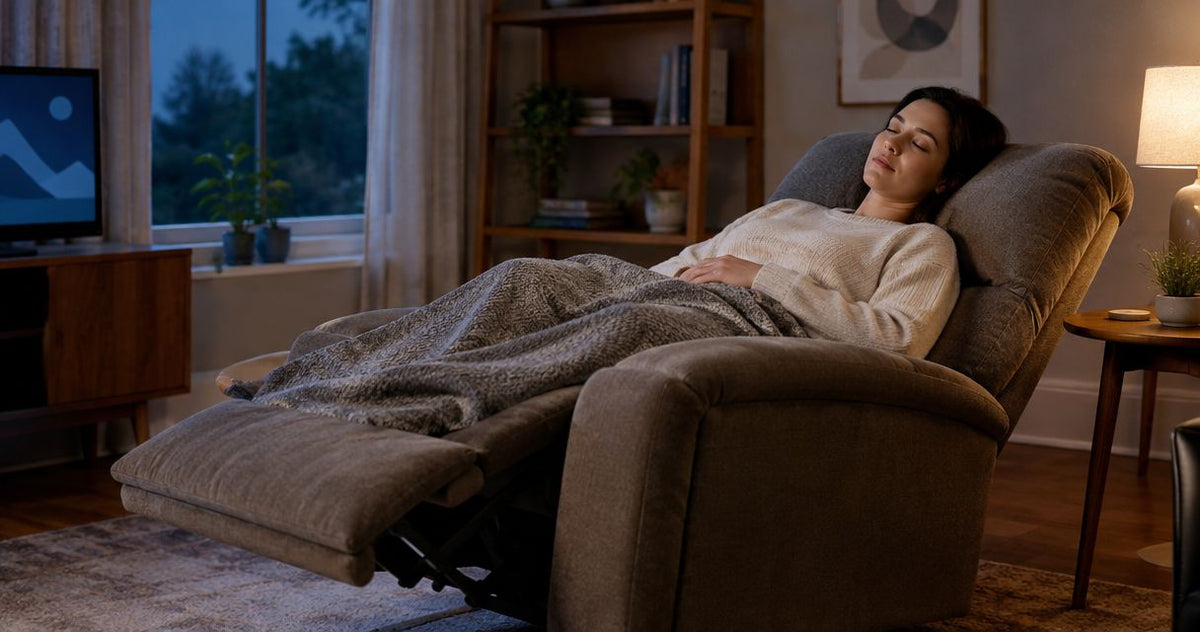
Yes, you can sleep in a recliner every night in 2026 — people managing sleep apnea, acid reflux, congestive heart failure, or post-surgical recovery already do it as a matter of routine. The catch is the chair itself: a basic recline-and-rock model from a furniture store isn't built for eight hours of nightly use, and the wrong chair trades one problem (poor circulation from a flat mattress) for another (stiffness and pressure points from sitting upright too long).
- You can sleep in a recliner every night if it reclines to near-flat, not just a 130-degree lounge position.
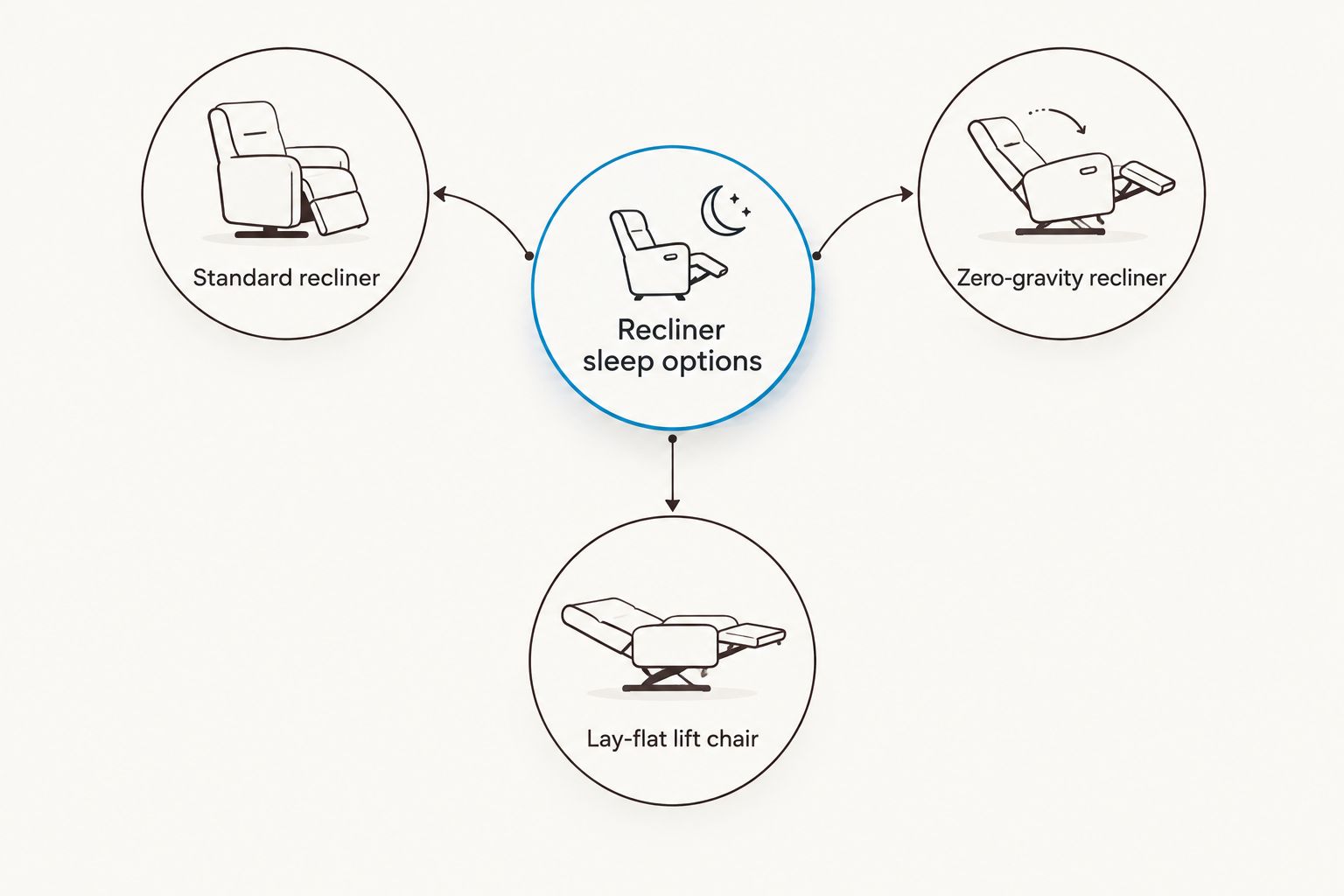
- Lay-flat lift chairs recline to 180 degrees, closer to a bed's sleep angle than a standard recliner.
- Zero-gravity recliners like the CloudFloat hit 139 degrees, easing pressure on the lower back and hips.
- Standard recliners work fine for naps but lack the lumbar and leg support needed for nightly sleep.
- Ask a doctor about nightly recliner sleep if it's tied to edema, sleep apnea, or heart symptoms.
Why This Matters
Sleeping upright, night after night, is not a fringe habit in 2026 — it's standard advice for a specific list of conditions: GERD and acid reflux, obstructive sleep apnea, congestive heart failure, COPD, edema in the legs, and recovery from hip, knee, or spinal surgery. In every one of those cases, gravity is doing part of the work a flat bed can't do.
The furniture still matters. A recliner designed for watching television for two hours and a chair designed to hold your body for eight hours are different products, even when they look similar in a showroom. The real question isn't whether you can sleep in a recliner every night — it's whether your specific chair can support that.
Can You Sleep in a Recliner Every Night? What the Chair Needs to Do
The answer comes down to recline angle, weight support, and how the chair holds your spine and legs once you stop moving. A chair that stalls at a 130-degree lounge position asks your neck and lower back to do the work all night; a chair that reclines closer to flat or into a zero-gravity position spreads that load evenly.
| Chair type | Recline angle | Best for | Verdict |
|---|---|---|---|
| Standard recliner | roughly 130-145\u00b0 | Occasional naps, TV sessions | Skip for nightly sleep |
| Zero-gravity recliner | 139\u00b0 (CloudFloat) | Reflux, circulation, mild sleep apnea | Buy for nightly use |
| Lay-flat lift chair | 180\u00b0 | Full-time overnight sleeping, post-op recovery | Buy for nightly use |
If you're already browsing recliners built for everyday sleeping, recline angle is the single spec worth checking before anything else — fabric, color, and armrest style come second.
Lay-Flat Lift Chairs (180\u00b0 Recline): Best for Full-Time Overnight Sleeping
A lay-flat lift chair reclines to 180 degrees, which puts your spine in roughly the same position it would be in on a mattress, while still letting a lift motor bring you upright for standing. The SleepingTitan Origin lay-flat lift chair is built specifically for this use case, with a 25.1-inch wide seat and 74.2-inch overall length for taller users. For larger body types, the Titan Lift Chair's 500-lb capacity and 28-inch seat handle nightly weight-bearing that a standard recliner frame isn't rated for. Verdict: Buy if you're sleeping upright every night for a diagnosed condition.
Zero-Gravity Recliners (139\u00b0 Recline): Best for Reflux and Circulation
Zero-gravity recliners don't go fully flat, but they tilt the legs above heart level and distribute weight along the spine rather than concentrating it at the hips. That 139-degree position is why people with acid reflux or mild sleep apnea often do better here than lying completely flat — a slight forward tilt keeps the airway more open than a horizontal bed. Verdict: Buy for reflux, swelling, or occasional overnight use; Hold if a lift function to stand up unassisted matters more to you.
Standard Recliners: Best for Naps, Not Nightly Sleep
A standard recliner that tops out around 130-145 degrees is fine for a two-hour nap in front of the television. Push that to eight hours, every night, for months, and the lack of proper lumbar and leg support starts showing up as neck stiffness and hip pain. Verdict: Skip for nightly sleep — use it for daytime rest only.


Why Sleeping in a Recliner Works Differently for Everyone
Two people with the same chair can have very different nightly experiences. The factors that decide whether a recliner works for you long-term:
- Underlying condition — GERD, sleep apnea, CHF, and edema each respond differently to recline angle
- Recline angle and lay-flat capability — 139\u00b0 vs. 180\u00b0 changes spinal load and airway position
- Weight capacity and seat width — a 500-lb rated frame flexes differently than a standard 250-lb frame under nightly use
- Battery backup — a power outage shouldn't leave you stuck mid-recline overnight
- Lumbar and headrest support — independent motors adjust these separately from the main recline
- Room placement and wall clearance — lay-flat chairs need more floor space than a wall-hugger design
If nightly recliner sleep is tied to a diagnosed condition rather than convenience, loop in your physician rather than guessing at the right chair alone — ongoing primary care for seniors is what catches early signs of edema or heart strain before the chair becomes a workaround instead of a solution.
Is It Bad to Sleep in a Recliner Every Night?
It isn't bad on its own — sleeping upright every night is standard guidance for reflux, sleep apnea, and heart failure patients in 2026. What causes problems is using a chair that doesn't support the legs and lower back properly over eight hours, which is why recline angle matters more than how the chair looks.
Can Sleeping in a Recliner Cause Blood Clots?
Prolonged sitting with legs down and unsupported is a known circulation risk, which is exactly why zero-gravity and lay-flat positions exist — they elevate the legs above heart level instead of leaving them hanging. A chair that reclines to 139\u00b0 or 180\u00b0 addresses this directly; a chair stuck at 130\u00b0 with the legs low does not.
Do Lift Chairs Recline Flat Enough to Sleep On Like a Bed?
180 degrees is as close to a bed's sleep angle as a chair gets, and that's exactly the spec lay-flat lift chairs like the SleepingTitan Origin are built around. A chair reclining to 139\u00b0 or less will feel noticeably more like sitting than lying down, which some people with reflux actually prefer.
FAQ
Can you sleep in a recliner every night?
Yes, you can sleep in a recliner every night if it reclines to 139° or higher. Below that, expect stiffness in the neck and lower back after a few weeks of nightly use.
Is it bad to sleep in a recliner every night?
It isn't bad for most people, and it's standard advice for sleep apnea, reflux, and heart failure. The risk shows up when the chair doesn't support the legs and spine over eight hours.
What is the best recliner for sleeping every night?
A lay-flat lift chair reclining to 180°, such as the SleepingTitan Origin, is best for full-time overnight sleeping. A zero-gravity recliner at 139° works better for reflux and circulation.
How much weight can a lift chair hold for nightly sleeping?
The Titan Lift Chair holds up to 500 lbs with a 28-inch wide seat, built for nightly weight-bearing that standard recliner frames aren't rated for.
Can sleeping in a recliner cause blood clots?
Sitting with legs low and unsupported for hours raises circulation risk, which is why zero-gravity and lay-flat positions elevate the legs above heart level instead.
Do zero-gravity recliners help with sleep apnea?
Zero-gravity recliners at 139° keep the airway more open than lying fully flat, which is why many people with mild sleep apnea sleep better upright than horizontal.
What happens if you sleep in a standard recliner every night for months?
A standard recliner topping out at 130-145° lacks the lumbar and leg support for nightly use, and months of that position typically shows up as neck stiffness and hip pain.
One Last Thing
Most people assume fully flat is always better than a partial recline, but that's backwards for reflux and mild sleep apnea. The CloudFloat's 139-degree zero-gravity position often works better for those conditions than a lay-flat lift chair's 180 degrees, because the forward tilt keeps the airway and stomach angled in a way a flat bed can't. Match the angle to the condition, not the other way around.