
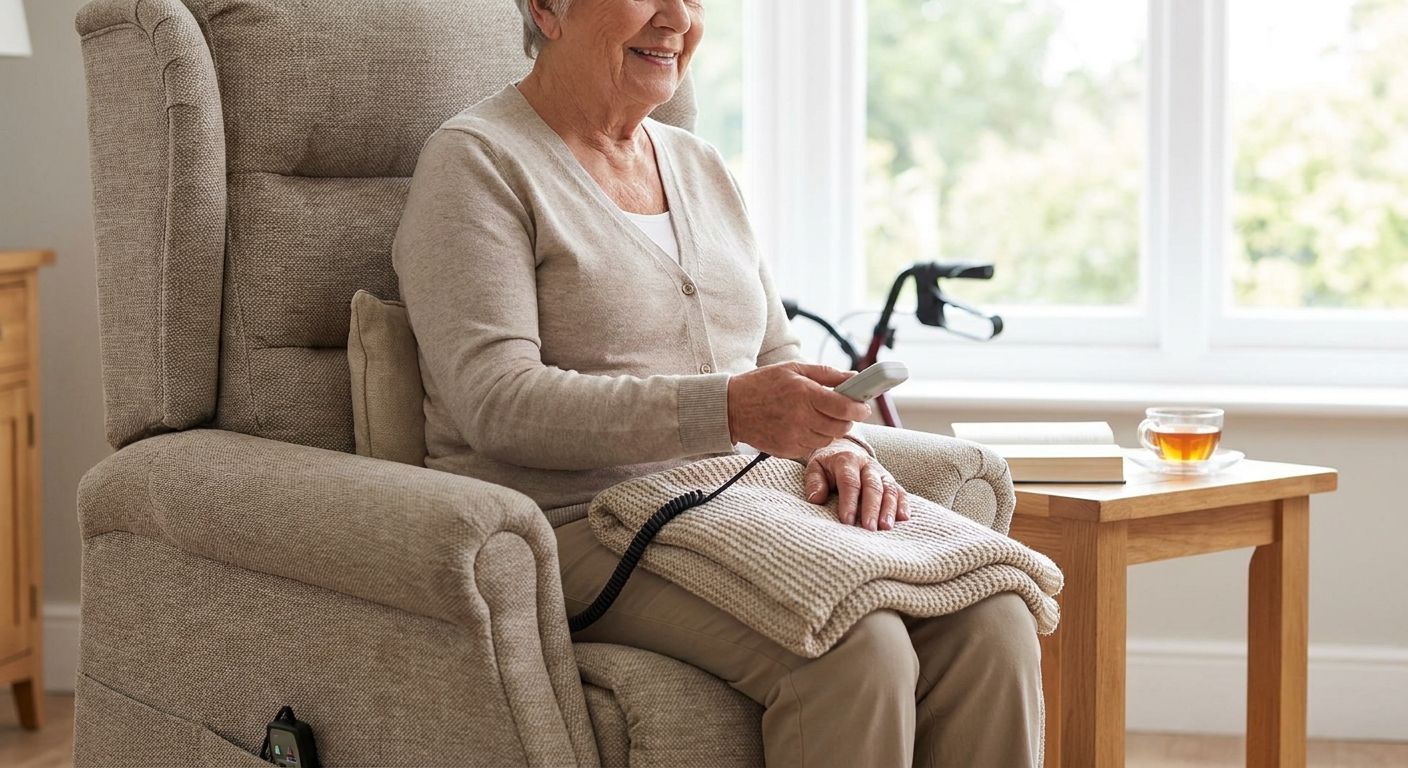
Spinal stenosis narrows the space around your spinal nerves, and a standard recliner locks your lower back into the curved seated position that makes that narrowing worse — a lift chair for spinal stenosis needs to do the opposite by opening the hip angle and getting you to standing without straining your spine.
- The best lift chair for spinal stenosis in 2026 is the ZeroG Zero Gravity Lift Chair Recliner — Buy.
- SleepingTitan Origin Lay Flat Lift Chair reclines to 74.2 inches on dual motors — Buy for full lay-flat relief.
- Titan Lift Chair holds 500 lbs on a 28-inch wide seat for larger frames — Consider.
- Skip single-motor recliners with fixed backrests — they rarely reach a stenosis-friendly flexed position.
Why This Matters
Spinal stenosis compresses the nerves running through your lower spine, and most people feel it worst when standing or sitting upright with the lower back arched. A slightly flexed, legs-elevated position tends to open that space back up — which is exactly why a flat couch cushion or an upright dining chair usually feels worse than a recliner that actually adjusts.
A lift chair adds two things a regular recliner can't: powered assistance to standing, so you're not pushing through a compressed spine to get up, and a wider range of backrest and footrest angles so you can find the flexed position that eases pressure. Not every lift chair does this well, which is the whole reason to compare specs instead of just picking whatever's on sale.
Who This Is For
This guide is built for adults managing spinal stenosis or chronic lower back pain who spend hours a day sitting and are shopping for a chair that won't make it worse — and for the adult children and caregivers buying on their behalf. If you're choosing furniture for someone who struggles to stand up from a couch, has a doctor-recommended flexed sitting position, or needs extra lumbar support after a stenosis diagnosis, the criteria below apply directly to you.
What To Look For In A Lift Chair For Spinal Stenosis
Recline depth and zero-gravity position
A true zero-gravity recline raises your legs above heart level while tilting your torso back, which distributes body weight along the spine instead of concentrating it at the lower back. For spinal stenosis, this angle matters more than upholstery or color — it's the actual mechanism that relieves pressure.
Lumbar and seat-back shape
A flat, unshaped backrest lets your lower back sink into an arched position, the opposite of what stenosis needs. Look for a backrest that supports a slightly rounded lumbar curve, or a lay-flat design that lets you find a fully extended position when sitting upright gets uncomfortable.
Motor count and independent adjustment
Single-motor chairs move the footrest and backrest together, which forces one fixed relationship between the two. Dual- and quad-motor chairs let you set the backrest angle independently from the footrest and headrest, so you can dial in the exact flexed position that eases your specific pain point.
Weight capacity and seat width
A chair rated below your body weight will sag at the seat pan within months, changing the sitting angle you originally bought it for. Buyers over 250 lbs, or anyone built broad through the hips and shoulders, should shop weight capacity and seat width first, comfort features second.
Heat and massage as pain management extras
Built-in heat and massage aren't medical treatment, but they're a legitimate comfort layer for muscle tension that often accompanies stenosis pain. Treat these as a bonus on top of the right recline geometry, not a substitute for it.
Ease of the sit-to-stand lift
The lift mechanism should tilt smoothly and slowly enough that you can control your own footing, not launch you forward. If a floor model lifts abruptly in the showroom, it will do the same at home — that's a dealbreaker, not a quirk you get used to.
Top Picks For 2026
The zero-gravity pick: ZeroG Zero Gravity Lift Chair Recliner This chair's zero-gravity recline lifts the legs above heart level while opening the hip angle, which is the specific position most stenosis sufferers report relief in. It's priced at $928 in the current Edward Creation catalog, positioning it as a mid-range option rather than an entry-level recliner. For anyone whose pain worsens in a standard upright seated position, this is the chair to test first. Verdict: Buy.
The lay-flat pick: SleepingTitan Origin Lay Flat Lift Chair Dual motors let the backrest go fully flat, stretching out to 74.2 inches in length on a 25.1-inch wide seat — useful if sitting upright for any stretch of time is what triggers your pain. It's built for people who need to alternate between sitting, reclining, and lying flat without leaving the chair or transferring to a bed. Verdict: Buy for anyone who needs the full-flat option, not just a deep recline.
The heavy-duty pick: Titan Lift Chair A 28-inch wide seat and 500 lbs weight capacity mean the frame and lift motor won't strain under a larger body, which matters because a sagging seat pan changes your sitting angle over time — and a changed angle undoes whatever relief the chair was bought for. The foot rest extension adds length for taller users who'd otherwise have their calves unsupported. Verdict: Consider if standard-width lift chairs have left your feet hanging off the footrest.
The wildcard: LuxQuad Lay Flat Lift Chair (4-motor) Four independent motors control the headrest, lumbar section, footrest, and backrest separately, which is more granular adjustment than most stenosis buyers will actually need day to day. It's worth a look if you've already tried a dual-motor chair and still can't find a comfortable flexed position. Verdict: Consider — it solves a real problem, but it's overkill for most first-time buyers.


What To Avoid
- Single-motor recliners marketed as lift chairs. They move the footrest and backrest as one fixed unit, so you can't isolate the lumbar-supporting angle stenosis usually needs — you get one recline position, take it or leave it.
- Overstuffed "cloud" cushions. A seat that's too soft lets the pelvis sink and increases lower back curve, working directly against what a flexed position is supposed to do.
- Wall-hugger designs bought purely for space-saving. Some wall-hugger chairs limit total recline angle to fit tight against a wall, which can cap you well short of the zero-gravity position that actually helps. Measure clearance before assuming a space-saving chair still reclines far enough.
Verdict Comparison: Lift Chairs For Spinal Stenosis
| Chair | Recline Type | Motors | Seat Width | Verdict |
|---|---|---|---|---|
| ZeroG Zero Gravity Lift Chair Recliner | True zero-gravity | Single | Standard | Buy |
| SleepingTitan Origin Lay Flat | Full lay-flat | Dual | 25.1 in | Buy |
| Titan Lift Chair | Standard recline + footrest extension | Dual | 28 in | Consider |
| LuxQuad Lay Flat Lift Chair | Full lay-flat, independent zones | Quad | Extra large | Consider |
Every product here comes from Edward Creation's 2026 lift chair lineup, and the specs in this table are pulled directly from each listing — check current availability before ordering.
FAQ
What's the best lift chair for spinal stenosis in 2026?
The ZeroG Zero Gravity Lift Chair Recliner is the strongest overall pick for spinal stenosis in 2026 because its true zero-gravity recline lifts the legs above heart level and opens the hip angle. For anyone who needs a fully flat position instead, the SleepingTitan Origin Lay Flat Lift Chair is the better fit.
Is a zero-gravity lift chair better than a regular recliner for lower back pain?
Yes, a zero-gravity lift chair distributes body weight evenly along the spine instead of concentrating it at the lower back the way an upright recliner does. Regular recliners typically max out at a shallow recline angle that doesn't reach the flexed position most stenosis sufferers find relief in.
How much does a lift chair for spinal stenosis cost in 2026?
Lift chairs built for spinal stenosis range from roughly $320 for a basic power lift recliner with heat and massage to $928 or more for a full zero-gravity or lay-flat model. Price generally tracks with motor count and recline range, not just upholstery quality.
Can a lift chair worsen spinal stenosis symptoms?
A poorly chosen lift chair can worsen symptoms if it forces a flat, unshaped backrest position that lets the lower back arch. Single-motor chairs with no independent lumbar or backrest adjustment are the most common culprit.
What's the difference between a lift chair and a lay-flat lift chair?
A standard lift chair reclines to an angle somewhere short of horizontal, while a lay-flat lift chair reclines the backrest all the way down, sometimes to over 74 inches in total length. Lay-flat models suit people who need to fully extend their spine periodically throughout the day.
How wide a seat do I need for a lift chair with spinal stenosis?
Match seat width to your actual hip and shoulder measurements, not just your general size — a seat that's too narrow forces poor posture that can aggravate stenosis pain. Options like the Titan Lift Chair go up to 28 inches wide with a 500 lbs weight capacity for larger frames.
Do heat and massage features actually help lower back pain?
Heat and massage don't treat spinal stenosis directly, but they ease the muscle tension that often builds up around a compressed nerve area. Treat them as a comfort add-on layered on top of correct recline geometry, not a replacement for it.
What weight capacity should I look for in a heavy-duty lift chair?
Buy a chair rated above your actual body weight, with margin, since a seat pan that's near its limit sags over time and changes the sitting angle you originally chose the chair for. The Titan Lift Chair's 500 lbs capacity covers most larger-frame buyers with room to spare.
One Last Thing
The detail most buyers miss: the lift mechanism's speed matters as much as the recline angle. A chair that lifts you to standing too fast can throw off your balance right as you're trying to get your feet under you — ask about adjustable lift speed before you buy, not after.