

Choose by weight capacity first, then seat fit: a 500 lb lift chair must meet your weight requirement, while an oversized lift chair must provide the seating space you need. When comparing a 500 lb lift chair vs oversized lift chair in 2026, do not treat a wider seat as proof of a higher weight rating—or a higher rating as proof of a comfortable fit.
- 500 lb lift chair vs oversized lift chair: check weight capacity first, then usable seat width.
- Edward Creation’s Titan combines a 500 lb capacity with a 28-inch seat; both specifications matter.
- StashEase is rated for 400 lb, so its oversized label does not make it a 500 lb chair.
- Measure seat depth, seat height, and room access before choosing a heavy-duty lift chair.
Why this matters
A chair can meet your weight requirement and still feel cramped. A roomy chair can also have a weight rating below what you need. Capacity and size are separate checks; neither replaces the other.
Start by confirming that you need lift assistance, not just powered reclining. The lift chair vs power recliner guide explains that distinction: reclining changes your resting position, while a lift mechanism raises and tilts the seat to assist you toward standing.
For seniors and family caregivers shopping in 2026, the useful question is not which label sounds stronger. It is whether the exact chair meets the user's weight, seated dimensions, and everyday movement needs.
500 lb vs oversized lift chairs: capacity or seat width?
Weight capacity comes first as a limit; seat width comes next as a fit requirement. A 500 lb rating describes the stated user-weight limit. Oversized describes a larger chair or seating area, but the word alone gives you neither a specific width nor a weight rating.
These examples show why you should read both specifications rather than choose by category name.
| Chair example | Stated weight capacity | Seat width | Best for | Main advantage | Main limitation |
|---|---|---|---|---|---|
| Titan lift chair | 500 lb | 28 inches | Shoppers who need this capacity and seat width | Combines a stated heavy-duty rating with a stated wide seat | Width and capacity do not establish seat-depth or seat-height fit |
| StashEase oversized lift chair | 400 lb | 28 inches | Shoppers within the rating who need this seat width | Provides the same stated seat width in this comparison | Its 400 lb rating does not meet a requirement above 400 lb |
The distinction is concrete: these examples share a 28-inch seat specification but have different weight ratings. A seat measurement cannot tell you how much weight the chair supports.
Edward Creation’s Titan lift chair is best for shoppers who need a 500 lb rating and a 28-inch seat. That recommendation addresses those specifications only; you still need to check the remaining dimensions against the person using it.
What does a 500 lb rating tell you?
A 500 lb rating states the chair's listed weight capacity. It does not mean over 500 lb, and it does not tell you the chair's seat width, backrest height, or extended length.
Use the rating as a screening requirement. If the user's weight exceeds the stated limit, remove that chair from the shortlist rather than assuming that a wide cushion or heavy-looking frame makes the limit flexible.
Follow the manufacturer's instructions for the exact model. Do not invent an extra allowance above its rating or apply a universal safety-margin percentage that the manufacturer has not specified.
What does oversized tell you?
Oversized signals that you should inspect the dimensions. It is not a measurement by itself. Look for the actual seat width, seat depth, seat height, and overall chair dimensions.
You also need to know what the width describes. Overall width includes the chair's arms and structure; usable seat width describes the space available for sitting. Those measurements answer different questions.
A larger chair is not automatically a better chair for a smaller person. If reaching the armrests or sitting back comfortably becomes difficult, extra size has not solved the fit problem.
500 lb capacity: choose by the stated limit
A 500 lb lift chair belongs on your shortlist when its rating meets your requirement. Keep that check separate from comfort features, upholstery, and reclining options. None of those features changes the listed capacity.
For your 2026 comparison, write the model name and weight rating together. This keeps a specification attached to the exact chair instead of letting a category label stand in for it.
- Confirm the exact model. Similar names and different versions require their own specification checks.
- Read the stated capacity. Do not substitute words such as large, oversized, or heavy-duty for a numeric rating.
- Respect the limit. A chair rated up to 500 lb is not a chair rated above 500 lb.
- Then check fit. A suitable weight rating earns a chair further consideration, not an automatic purchase.
The benefit of capacity-first shopping is a clear exclusion rule. The limitation is that it leaves the comfort question unanswered. You need the measurements in the next section before deciding whether the chair suits your body.
28-inch seat width: compare usable space, not the outside width
A 28-inch seat specification gives you a dimension to compare with your current seating. It does not establish the chair's overall width, doorway fit, or distance between every part of the armrests.
Ask how the seat measurement was taken if the listing is unclear. Cushion shape and arm placement matter when you assess the space you will actually use. Compare like measurements rather than putting a cushion measurement beside an outside-frame measurement.
The advantage of a wider seat is additional side-to-side room when you need it. The trade-off is that width alone does not establish whether you can comfortably use the armrests or whether the chair fits your room.
Choose enough usable width for your body—not the widest chair simply because it is available in the category. Keep seat depth and height beside the width on your comparison sheet.
400 lb capacity: an oversized chair still has a limit
StashEase's 400 lb rating is the deciding specification if you are considering it for someone who needs a higher capacity. Its oversized description and 28-inch seat do not raise that limit.
For a shopper within the rating, the chair remains a fit question: does the seat provide the needed space, and do the other dimensions support comfortable sitting and standing? For a shopper above the rating, the capacity check ends the comparison.
This is why Edward Creation's oversized lift chairs should be assessed model by model. Oversized is a size description, not a substitute for a stated weight capacity.
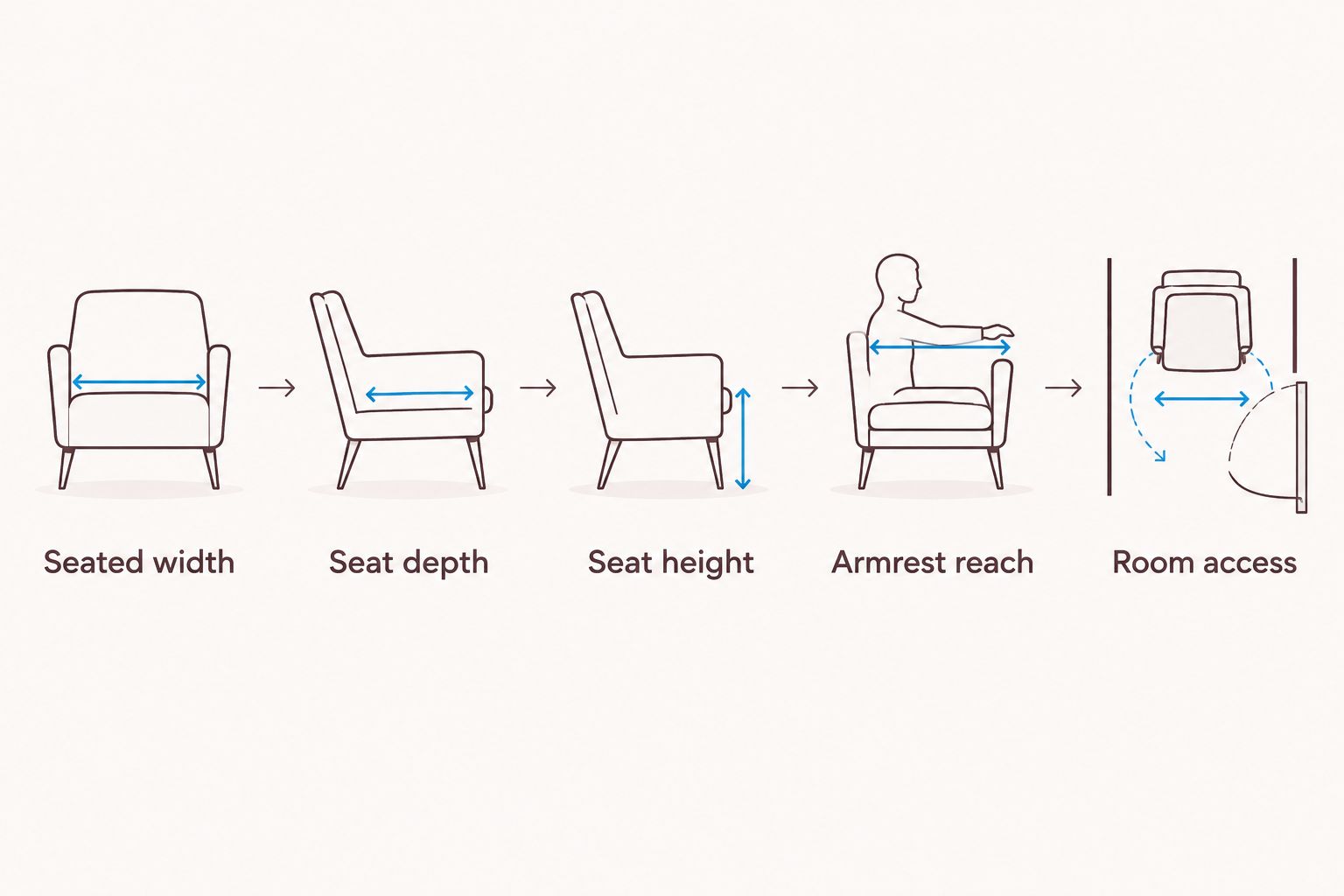
Why lift-chair fit varies
People with the same weight do not necessarily need the same seat dimensions. Likewise, people who need a wide seat do not necessarily need the same weight rating. These factors explain why both checks belong in your decision.
- Weight requirement: The user's weight must fall within the exact chair's stated capacity.
- Seated width: Your side-to-side space requirement determines whether the usable seat feels cramped or suitably roomy.
- Seat depth: The distance from the seat front to the back affects whether you can sit against the backrest comfortably.
- Seat height: The distance from the floor to the seat affects foot placement when sitting upright.
- Armrest reach: Extra width changes the distance between you and the armrests; check whether you can use them comfortably.
- Room access: The chair's outside dimensions and delivery configuration determine which measurements you need to compare with your entry route.
Do not use body weight to predict every dimension. Measure the person and the space separately, then bring those requirements together when reviewing a chair.
How do I measure for a lift chair before buying?
Use a firm chair that already fits you reasonably well as a starting point, then record what you want to improve. Ask someone to help with the tape measure so you can remain seated naturally.
Start with your seated fit
- Check seated width. Sit in your usual clothing and compare the usable space between the arms with how much room you need. Note whether your current chair presses against your sides or leaves more space than you want.
- Check seat depth. Sit against the backrest and look at where the seat front meets your legs. Record the depth of the current seat and whether it feels too long, too short, or comfortable.
- Check seat height. With the chair upright, assess whether your feet rest comfortably on the floor. Measure the seat height and note whether changing it would improve your seated position.
- Check armrest reach. Rest your arms naturally and assess whether you can reach the armrests without an awkward stretch. Do not assume extra seat width is always helpful.
- Check room access. Measure the doorway and the narrowest turns on the route to the chair's intended location. Compare those measurements with verified chair or shipping dimensions, as appropriate.
These checks give you a personal reference rather than a universal chair size. If your current seat is uncomfortable, keep its measurements but clearly label the problem; do not use it as a perfect template.
Compare the measurements with the exact chair
For a 2026 purchase, keep a written comparison of your fit requirements and the specifications of the exact model. Mark each measurement as suitable, unsuitable, or needing clarification before you decide.
Do not turn seat width into a doorway measurement. The chair's arms and frame extend beyond the sitting area, and the delivery configuration requires its own check. Also review the space needed for reclining and lifting according to the model's instructions.
If standing or transferring is difficult, ask an occupational therapist or another qualified clinician to assess your seating needs. A retail dimension chart does not replace an individual assessment of how you move.
Do I need a 500 lb chair if I only need a wider seat?
A 500 lb rating is not required solely because you need a wider seat. Width and capacity answer separate questions, so choose a chair whose rating meets your weight requirement and whose dimensions meet your fit requirement.
The shared 28-inch seat specification in this comparison makes the point: the Titan and StashEase examples do not have the same capacity. Select by the full set of requirements rather than assuming that wide seating always means a particular rating.
Is a 500 lb lift chair always more comfortable than an oversized chair?
A 500 lb rating does not establish comfort. Seat width, depth, height, back support, and armrest position all need to suit the person using the chair.
An oversized chair is not automatically more comfortable either. Choose the dimensions that work for you, then assess the chair's controls and positioning features without treating the weight rating as a comfort score.
Can an oversized recliner help me stand up?
An oversized recliner helps with standing only if it also has a lift mechanism. Powered reclining by itself moves the chair into a resting position; it does not establish lift assistance.
Check the exact product description for the lifting function. For your 2026 shortlist, write lift assistance as a separate requirement beside capacity and fit so it does not disappear behind comfort features.
FAQ
What's the difference between a 500 lb lift chair and an oversized lift chair?
A 500 lb lift chair has a stated 500 lb weight capacity, while oversized describes chair or seating size. Check both the numeric weight rating and the actual seat dimensions before choosing.
Does a 28-inch seat mean a lift chair supports 500 lb?
A 28-inch seat does not establish a 500 lb weight capacity. Titan and StashEase have the same stated seat width in this comparison but are rated for 500 lb and 400 lb respectively.
Can someone over 400 lb use the StashEase oversized lift chair?
StashEase's stated 400 lb rating does not support choosing it for someone over 400 lb. Select a model whose stated capacity meets the user's weight requirement.
Which Edward Creation lift chair combines a 500 lb rating with a wide seat?
Edward Creation's Titan lift chair combines a 500 lb rating with a 28-inch seat. Check seat depth, seat height, and overall dimensions separately to establish personal and room fit.
Is seat width the same as the overall width of a lift chair?
Seat width is not the same as overall chair width. Use the seat measurement for sitting space and the verified outside or shipping dimensions for access planning.
Should I buy the widest lift chair I can find?
Buy a lift chair that fits you rather than choosing the widest seat by default. Check whether you can sit against the backrest, place your feet comfortably, and reach the armrests.
Does a 500 lb lift chair support more than 500 lb?
A stated 500 lb capacity does not establish support above 500 lb. Follow the exact model's rated limit and manufacturer instructions.
What should a caregiver check before ordering an oversized lift chair?
A caregiver should check weight capacity, usable seat width, seat depth, seat height, armrest reach, and room access. Confirm that the exact model also provides lift assistance if standing support is required.
One last thing
The most useful comparison is not oversized versus heavy-duty. It is the person's requirements versus the exact chair's specifications. A 28-inch seat can appear on chairs with different weight ratings, so neither label can do the other label's job.
Before ordering, write your weight requirement and seated measurements on the same page. Keep room-access measurements separate, and resolve any unclear specification rather than filling the gap with an assumption.