
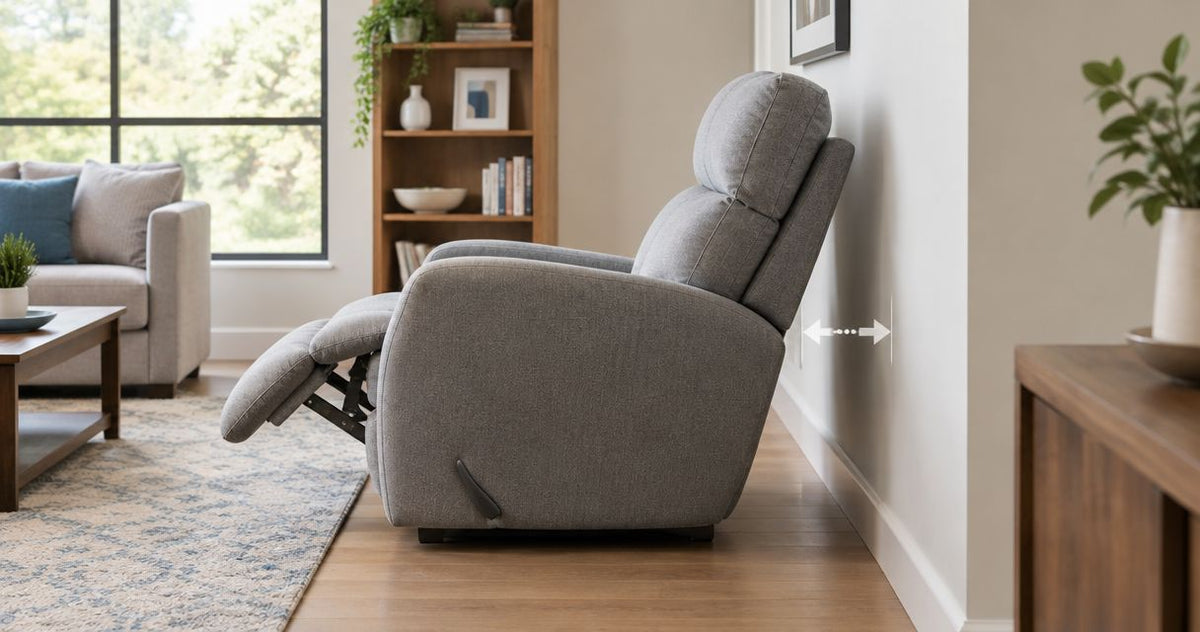
A wall-hugger recliner needs the rear clearance specified for that exact model; there is no universal inch measurement you can safely apply to every chair in 2026. That rear gap does not include the space needed for the extended footrest, nearby furniture, or a clear route for sitting down and standing up.
- Wall hugger recliner clearance is model-specific: use the manufacturer's instructions, not a generic inch estimate.
- Edward Creation's Nimbus is a wall-hugger power recliner, not a lift chair.
- Check rear clearance, footrest travel, and walking room before choosing a recliner.
- Zero-gravity positioning does not establish wall clearance or provide lift assistance.
How much wall clearance does a wall-hugger recliner need?
Use the minimum rear clearance stated in the chair's installation instructions, measured from the reference point those instructions identify. A wall-hugger design reduces the space needed behind the chair by moving the seat forward as it reclines. It does not mean the chair belongs directly against the wall.
For a relevant example, the Nimbus zero-gravity power recliner with power headrest and wall-hugger design combines those named features. Edward Creation's Nimbus is best for shoppers seeking a wall-hugger power recliner, not lift assistance. Confirm its installation clearance before deciding where it belongs; the wall-hugger name alone is not a measurement.
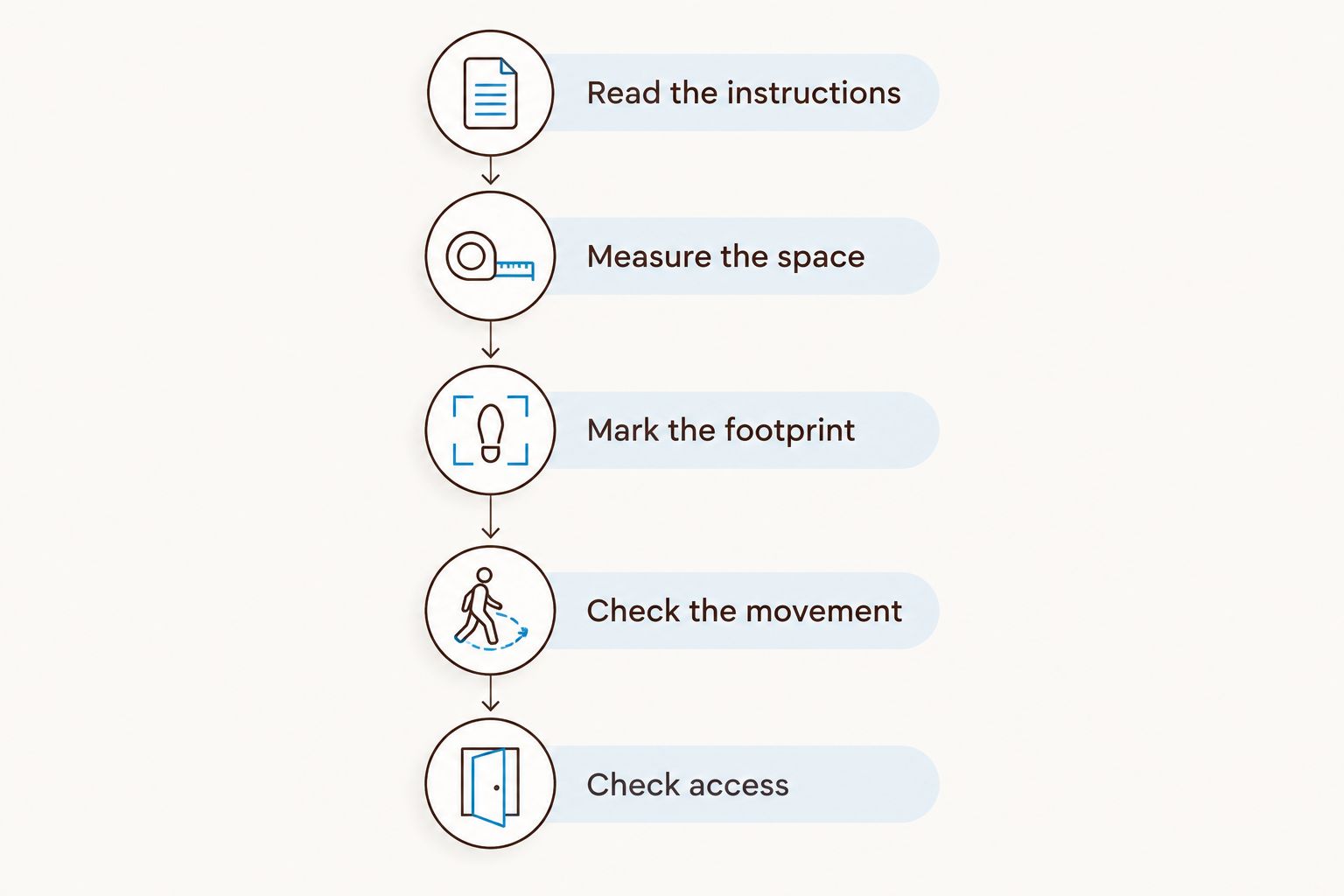
Follow this sequence before choosing a position:
- Read the instructions. Find the required rear clearance and the point from which it is measured.
- Measure the space. Check the wall, trim, nearby furniture, and available floor area.
- Mark the footprint. Include the chair's fully reclined dimensions, not just its upright size.
- Check the movement. After setup, follow the instructions and watch the chair through its full motion.
- Check access. Make sure the layout still lets you approach, sit, stand, and leave comfortably.
The useful answer is not just a gap behind the backrest. It is a position where the chair can complete its intended movement without contacting an obstruction or blocking access.
Why this matters
A recliner that fits while upright can still create a problem when the footrest opens. In a small living room, that movement can put the chair into the space you use to walk between a sofa, table, and doorway. Measure the working chair, not just the parked chair.
For your 2026 room plan, separate rear clearance from usable floor space. Saving room behind a recliner does not remove the need for space in front, and it does not guarantee that the seat suits the person using it.
This distinction matters when you are choosing furniture for an older adult or someone with limited mobility. Keep the route to the seat clear, and treat help with standing as a separate requirement from reclining comfort.
How to measure wall hugger recliner clearance
Start with the chair's instructions, a tape measure, and a simple sketch of the intended location. Record measurements in the same units used by the manufacturer so you can compare them directly. Do not mix overall chair dimensions with a clearance measurement.
Read the instructions
Look for the required distance behind the recliner and any restrictions on placement. Check whether the instructions measure from the upright backrest, the base, or another identified point. Use the stated reference point; changing it changes the meaning of the measurement.
If the product information lists only upright dimensions, ask for the installation instructions and fully reclined dimensions before ordering. A depth measurement describes the furniture; a clearance requirement describes the empty space it needs.
Measure the space
Check the nearest obstruction throughout the area the chair will occupy. A baseboard, projecting windowsill, shelf, or curtain can be closer to the moving backrest than the flat wall behind it. Include those objects in your layout rather than treating the wall as an empty surface.
For a power recliner, also identify the outlet and the route for its cord. Follow the manufacturer's cable-routing instructions, and keep the cord away from moving parts and the route people use to reach the seat.
Mark the footprint
Use removable floor markers suitable for your flooring to outline the proposed chair position. Mark the fully reclined footprint separately from the upright footprint, using verified dimensions. Add the location of the coffee table and other furniture to your sketch.
Do not use seat width as a substitute for overall width. Arms, the base, and other parts of the chair occupy room outside the seating surface; doorway fit is another separate check.
Check the movement
Once the chair is assembled and positioned according to its instructions, check the complete reclining motion. Watch the backrest, footrest, and adjustable headrest where fitted. Keep hands, pets, and objects away from the mechanism.
A final reclined position that looks clear does not establish that the entire movement is clear. Stop if the chair contacts an obstruction, and correct the placement before continuing according to the instructions.
Check access
Check the route to the seat with the recliner upright and with the footrest extended. You should not need to step over a cord, squeeze past a table, or climb around the footrest to reach another part of the room. For someone using a mobility aid, include that aid in the layout check.
Wall-hugger versus standard recliner: what changes?
A wall-hugger mechanism moves the seat forward to reduce the room needed behind the reclining backrest. A conventional non-wall-hugger recliner needs space for its backrest to move rearward. The exact installation requirement still belongs to the individual model, not the category label.
| Chair design | Best for | Main advantage | Main limitation | What to verify |
|---|---|---|---|---|
| Wall-hugger recliner | Layouts where rear space is restricted | Reduces the rear space needed for reclining | Still requires front space and model-specific installation clearance | Rear gap, fully reclined footprint, and access |
| Standard non-wall-hugger recliner | Layouts that can accommodate rearward backrest movement | Suits rooms where rear placement is not the main constraint | Rearward movement must be included in the layout | Backrest travel, footrest extension, and access |
Choose a wall-hugger for its movement pattern, not because you assume it has a smaller overall footprint. A chair can need less space behind it while still occupying substantial room when reclined.
When comparing models in 2026, ask for the same information for each: upright dimensions, fully reclined dimensions, and the installation clearance. Comparing one chair's upright depth with another chair's reclined depth does not tell you which fits better.
Why wall-hugger recliner clearance varies
The wall-hugger label describes a type of movement, not a standardized installation distance. Your usable gap also depends on the room around the chair. These factors explain why a generic inch recommendation is the wrong starting point:
- Mechanism design: The relationship between forward seat movement and backrest movement differs by model.
- Backrest profile: The outer upholstery and backrest shape determine what comes closest to an obstruction.
- Recline position: Check the full range you intend to use, rather than stopping at a partially reclined position.
- Adjustable components: A moving headrest needs its own unobstructed path where fitted.
- Room obstructions: Trim, shelves, curtains, and nearby furniture change the available space.
Use the manufacturer's minimum as an installation requirement, not as permission to ignore surrounding objects. If the instructions require additional precautions or a different placement, those instructions control.
Does zero gravity mean a recliner needs less wall clearance?
Zero-gravity positioning does not establish wall clearance. It describes a reclining position, while wall-hugger describes how the chair moves relative to the wall. Check both features separately.
Edward Creation's Nimbus wall-hugger recliner includes zero-gravity positioning in its product name, but that combination does not supply an installation distance. For a 2026 purchase, confirm rear clearance and the fully reclined footprint independently of the reclining-position description.
The same separation applies to lift assistance. A recliner that changes your resting position does not necessarily raise and tilt the seat to help you stand; choose a verified lift chair if that is the function you need.
Can you put a wall-hugger recliner against the wall?
Do not place a wall-hugger recliner directly against the wall unless its instructions explicitly permit that placement. The term does not establish that the backrest can touch the wall while the chair operates. Measure the specified gap from the specified reference point.
Soft upholstery touching a curtain is still contact with an obstruction. Check the whole movement path rather than judging clearance from the chair's upright appearance.
How much space do you need in front of a wall-hugger recliner?
Front space must accommodate the model's fully extended footrest and the access your room needs. Rear clearance and front space are separate measurements. Use the verified fully reclined dimensions to position a coffee table or other furniture.
Do not plan around moving a heavy table every time you recline. If the footrest blocks the room's normal route, change the layout or choose a chair whose verified dimensions suit the available space.
What to confirm before choosing Nimbus
Nimbus is the relevant Edward Creation wall-hugger recliner example for this question. Its named features include power reclining, a power headrest, and zero-gravity positioning; it is a non-lift recliner. That makes it a candidate when reclining and rear-space planning are your priorities, not when you need the seat to assist you into standing.
Before choosing the chair, confirm:
- The manufacturer's minimum rear clearance and measurement reference point.
- The upright and fully reclined overall dimensions.
- The movement space needed for the power headrest.
- The power-cord routing and installation instructions.
- Whether the seat dimensions suit the intended user.
A wall-hugger feature is an advantage only when the complete chair fits your room and your needs. Keep the room sketch with your measurements so you can compare the instructions with the actual layout, rather than relying on a product photograph.
FAQ
How many inches from the wall should a wall-hugger recliner sit?
Use the minimum rear clearance specified for the exact recliner model. Measure from the point identified in its installation instructions; wall-hugger is not a universal inch specification.
Can a wall-hugger recliner touch the wall?
Do not allow wall contact unless the manufacturer's instructions explicitly permit that placement. Check the full reclining movement, not just the upright position.
Is a wall-hugger recliner better for a small room?
A wall-hugger recliner is useful when space behind the chair is restricted. It still needs room for its fully reclined footprint and a clear route to the seat.
Does a zero-gravity recliner automatically have a wall-hugger design?
No, zero-gravity positioning does not establish a wall-hugger design. Confirm the movement mechanism and installation clearance separately from the reclining position.
Does Nimbus help lift you into a standing position?
Edward Creation's Nimbus is a non-lift power recliner, not a chair that provides lift assistance. Choose a verified lift-chair model if raising and tilting the seat to help you stand is a requirement.
Where should I measure if I have thick baseboards?
Follow the manufacturer's stated measurement reference point and account for projecting baseboards. Also check whether trim or other objects enter the backrest's movement path.
What should I check before buying a wall-hugger recliner in 2026?
Confirm model-specific rear clearance, upright dimensions, fully reclined dimensions, and installation instructions before buying in 2026. Check access, cord routing, and seat fit as separate requirements.
One last thing
Check the route out of the room while the footrest is extended. A recliner can clear the wall and still block the path you use every day. That is the layout problem a rear-clearance measurement alone will not catch.
Before settling your 2026 furniture arrangement, walk through the marked floor plan and check the door's opening path. Keep both chair movement and everyday movement in the decision; neither replaces the other.