
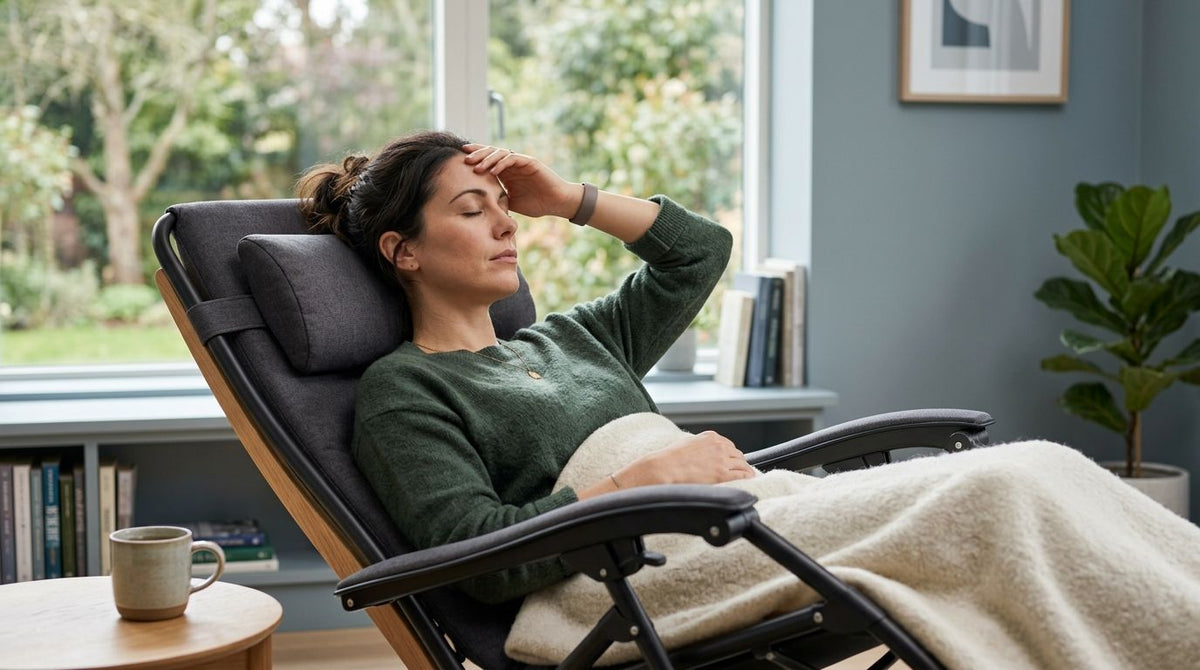
Migraine and headache sufferers researching a zero gravity recliner for migraine relief are looking for one specific mechanical benefit: legs elevated above heart level combined with a neutral neck angle, not just a soft chair to nap in. Edward Creation sells several zero gravity lift chairs built around that exact recline geometry, and this guide walks through what actually matters before you buy one in 2026.
- A true zero gravity recliner for migraine relief locks legs above heart level and a neutral neck angle — most 'recliners' only lay flat.
- Test the position with pillows before buying; the GrandComfort Zero Gravity Lift Chair from Edward Creation locks that angle in one motion.
- Avoid massage settings that vibrate near the headrest — target lower back and legs instead during a migraine.
- Dual-motor and lift-assist models matter most for anyone who gets dizzy standing up mid-attack.
Why this matters
Migraine pain often intensifies with pressure behind the eyes, sinuses, and temples, and posture changes the pressure gradient in your head. Elevating the legs above the heart while keeping the neck in a neutral line is the closest thing to the neutral body posture NASA documented for astronauts under reduced gravity — roughly a 128-degree angle between torso and thighs. A zero gravity recliner for migraine relief is built to hold that exact angle without you stacking pillows every time an attack starts.
Most recliners marketed as "zero gravity" only recline to lay-flat and stop there. The distinction matters more for migraine sufferers than for a general shopper, because the wrong angle can leave head pressure unchanged while you think you're doing something helpful.
Why zero gravity recliners matter for migraine sufferers specifically
A person shopping for back pain or general comfort cares about softness and lumbar support. A migraine sufferer cares about three things a standard recliner doesn't address: consistent leg elevation without re-adjusting mid-attack, a neck angle that doesn't strain the base of the skull, and control over vibration near the head. Edward Creation's zero gravity lineup, including the GrandComfort Zero Gravity Lift Chair, is built around motorized presets so you don't have to fine-tune the angle by hand while your head is pounding.
Sensitivity to touch and vibration during an attack also changes what "massage" means for this segment. A chair with strong headrest vibration is a liability here, not a feature.
Test leg elevation before you commit to a chair
Do this for free before spending anything. Lie on a bed or sit in any recliner you already own and elevate your legs above heart level using pillows for 15-20 minutes.
- Stack two or three firm pillows under your calves and ankles, not just your feet
- Rate migraine intensity on a 1-10 scale before and after the 20-minute test
- Repeat the test at three different times of day, since migraine triggers shift
- Note whether the throbbing actually eases, versus you simply feeling more rested
Find your neutral neck angle
This step is also free and takes five minutes with a rolled towel.
- Roll a hand towel and place it behind your neck while reclined
- Test with your chin level, neither tucked toward the chest nor extended back
- Watch for new tension building at the jaw or base of the skull
- Compare a fully flat position against one with the head slightly elevated
Move the test into a dedicated zero gravity recliner
Once pillows and a towel confirm the angle helps, a dedicated chair beats rebuilding that setup every session. The GrandComfort Zero Gravity Lift Chair locks a tested recline angle with one motorized motion instead of resetting cushions each time.
- Check whether the chair has a one-touch zero gravity preset, not just manual incremental recline
- Confirm the recline stops at a comfortable angle without over-extending past what you tested
- Ask about return windows in case the factory angle doesn't match your tested position
- Look for a model with a headrest that adjusts separately from the backrest
Match motor type to how often you'll need to adjust
- Single motor: back and legs move together, simpler mechanism, less mid-recline flexibility
- Dual motor: independent back and leg control, useful when standing up gradually helps with dizziness
- Lift assist: matters if a migraine leaves you unsteady when getting up from the chair
- Manual lever zero gravity chairs: no motor noise or cost, but no fine control once you're reclined
Choose heat and massage settings carefully
- Prioritize adjustable intensity levels, not a single fixed vibration speed
- Confirm heat can run independently of massage
- Avoid chairs where massage cycles start automatically with no simple off switch
- Favor massage points aimed at the lower back and legs, not vibration built into the headrest
- A USB charging port beats reaching for a buzzing phone at arm's length during an attack
Confirm seat width and weight capacity fit your frame
- Standard seat widths run roughly 20-22 inches; oversized models go up from there
- Larger frames should look at wider seats and higher weight capacity ratings
- Smaller frames need a lower seat height so feet reach the floor before reclining
- Armrest height should support elbows without shrugging the shoulders
Check battery backup if you use the chair daily
- Confirm a backup battery pack is available so a power outage doesn't strand you mid-recline
- Ask whether the backup pack is built in or sold separately
- Plan outlet placement so the charging cord doesn't run across a walkway
“If a massage setting vibrates against the headrest instead of the lower back, it's the wrong chair for migraine relief.”
Comparing zero gravity recliner options for migraine relief
| Option | Best for | Recline type | Key limitation |
|---|---|---|---|
| GrandComfort Zero Gravity Lift Chair | One-touch recline plus lift assist for standing up unsteady | Motorized zero gravity with lift | Confirm seat width before ordering if you need extra room |
| ZeroG Zero Gravity Lift Chair Recliner | Comparing motor configurations before buying | Motorized zero gravity | Check single- vs dual-motor spec on the product page |
| Nimbus Zero Gravity Power Recliner with Power Headrest | Small rooms where the chair sits close to a wall | Wall-hugger zero gravity, power headrest | Confirm exact wall clearance needed on the listing |
| Manual lever zero gravity chair (non-powered) | Budget buyers who don't need lift assist | Manual lever zero gravity | No fine-angle control once reclined, no lift function |
Verdict: for most migraine sufferers, a motorized zero gravity recliner with a one-touch preset beats a manual model — during an attack, fumbling with a lever is exactly the extra effort you're trying to avoid.
A few Edward Creation chairs built around heat and massage rather than a strict zero gravity angle still fit this segment if the massage settings are adjustable and target the back rather than the head.


Common mistakes migraine sufferers make when buying
- Buying for the massage feature alone and ignoring recline angle — the angle is what changes head pressure, not the vibration
- Choosing headrest vibration during an attack — vibration near the skull can intensify throbbing pain rather than relieve it
- Placing the recliner facing a bright window — light sensitivity is a common migraine trigger, and chair position won't fix a poor room setup
- Skipping the seat width and weight capacity check — an unstable or too-narrow chair undoes any comfort benefit from the recline itself
- Assuming any chair labeled "zero gravity" delivers the true angle — many recliners marketed with the term only lay flat and stop short of the elevated-leg posture that actually helps
FAQ
What's the best zero gravity recliner for migraine relief in 2026?
A motorized zero gravity lift chair with a one-touch recline preset and independently adjustable headrest, such as the GrandComfort Zero Gravity Lift Chair, works best because it locks a tested angle without manual fumbling during an attack.
Is a zero gravity recliner better than a regular recliner for headaches?
Yes, for the specific mechanism of leg elevation above heart level, because a standard recliner rarely holds that exact angle. A regular recliner can still help with general rest, but it doesn't target the same pressure gradient.
Does leg elevation actually help migraine pain?
Elevating the legs above heart level shifts blood pooling away from the head and can ease the pressure sensation many people report during a migraine. Results vary by person, which is why testing with pillows before buying a chair matters.
Should the massage function stay off during a migraine?
Massage aimed at the headrest or upper back should generally stay off, since vibration near the skull can worsen throbbing pain. Massage aimed at the lower back and legs is less likely to aggravate symptoms.
How much does a zero gravity lift chair cost?
Pricing varies by motor count, size, and features like heat and massage, so check current pricing directly on the product page. Dual-motor and lift-assist models generally cost more than single-motor or manual versions.
Can a zero gravity recliner replace migraine medication?
No, a recliner is a positional aid, not a medical treatment, and it doesn't replace prescribed medication or a doctor's care plan. It can be a supporting tool for managing pressure and rest during an episode.
What angle is considered true zero gravity in a recliner?
True zero gravity position is close to the 128-degree torso-to-thigh angle NASA documented as neutral body posture for astronauts. Many recliners marketed as zero gravity only recline flat and don't reach that specific elevated-leg angle.
Are wall-hugger zero gravity recliners good for small rooms?
Yes, wall-hugger designs like the Nimbus Zero Gravity Power Recliner need only a few inches of clearance behind the chair instead of the foot-plus space standard recliners require. Confirm the exact clearance on the product listing before buying.
One last thing
The 128-degree neutral body posture angle NASA documented decades ago is still the benchmark most zero gravity recliner engineering references today — it's worth checking whether a chair's recline actually reaches that range instead of stopping at a lay-flat position that only looks similar. If you're testing chairs in 2026, bring a phone with an angle-measuring app and check the number yourself before you buy.