
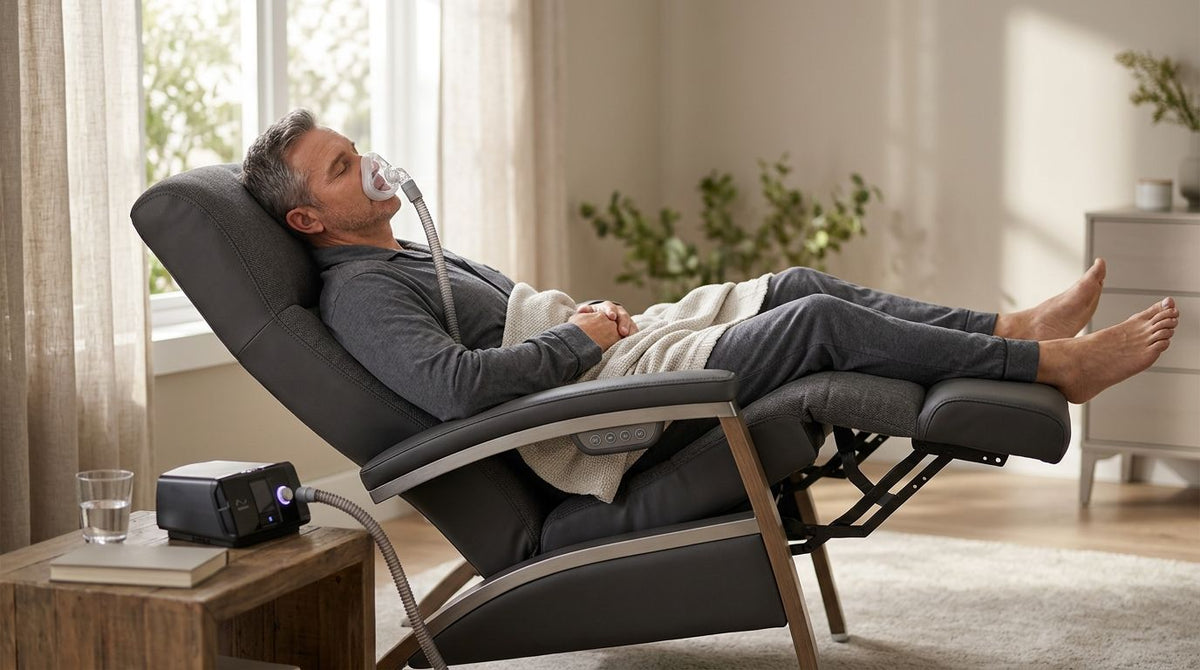
Zero gravity recliner for sleep apnea sleeping positions the body with legs above heart level and the torso reclined 20 to 30 degrees, a posture that keeps the airway more open than flat sleeping and reduces the reflux that often worsens apnea events. Upright sleepers managing COPD, congestive heart failure, or a diagnosed sleep apnea condition need a chair engineered to hold that incline through eight hours, not a recliner built for watching television.
- A zero gravity recliner for sleep apnea should lock a 20-30 degree incline, not just recline for TV watching.
- Lay-flat lift chairs with dual or four motors give sleep apnea sleepers independent head, leg, and back control.
- GrandComfort and ZeroG zero gravity lift chairs at Edward Creation cover different price tiers for 2026 buyers.
- Skip basic manual zero gravity recliners for nightly sleep apnea use; a motorized lock-in position matters more than looks.
- Battery backup keeps a lift chair usable during a power outage, a real concern for anyone who sleeps upright nightly.
Why zero gravity recliners matter for sleep apnea and upright sleeping
A standard recliner tips your torso back but drops your head with it, which does nothing for airway collapse. A true zero gravity position raises the legs above the heart while keeping the spine at a neutral, slightly inclined angle, the same posture pulmonologists describe when they tell patients to "sleep propped up." That's why Edward Creation's lineup of zero gravity lift chairs treats recline geometry as the first spec, not an afterthought.
For sleep apnea specifically, the goal isn't the deepest recline, it's a stable, repeatable incline you can return to every night without readjusting pillows or wedges. Upright sleepers who use a chair as their primary sleep surface, whether for apnea, reflux, or post-surgical breathing restrictions, need the chair to hold position under body weight for hours, not just for a nap.
Sleep apnea sleepers also tend to be older adults or people managing a second condition (heart failure, COPD, obesity-related apnea), which is why weight capacity and seat width matter as much as the recline mechanism itself.
Check your recline range before you buy
Recline angle is the single spec that separates a lounge chair from a sleep-positioning chair.
- Look for a stated recline range of at least 130 degrees from upright, giving you room to find the 20-30 degree sleep zone
- Confirm the chair holds position without a spring-back or "push-back" mechanism that requires continuous body pressure
- Prioritize chairs described as "lay-flat" if you also want a near-180 degree option for nights when apnea symptoms flare
- Avoid rocker-only recliners; the swivel-rock motion works against a locked sleep incline
Match seat width and weight capacity to your body
A chair that's too narrow forces shoulder rounding, which narrows the airway even at the right recline angle.
- Measure hip width seated and add 3-4 inches for clothing and shifting room
- Check the stated weight capacity against your actual body weight, not just "fits most adults"
- Oversized options with 28-inch wide seats and 500-lb capacity exist for larger-frame sleepers
- Confirm seat depth accommodates your leg length so knees aren't forced upward when reclined
Prioritize motor count and independent leg/back control
A single-motor recliner moves the back and legs together, which can't isolate the sleep-apnea incline from a full lay-flat position.
- Dual-motor chairs let you set the backrest angle independent of the footrest
- Four-motor chairs add independent headrest and lumbar control, useful if you also manage neck extension for airway alignment
- Test the remote layout before buying; small, labeled buttons matter at 2 a.m.
- Confirm the motor is rated for nightly use, not occasional recline
Add heat and massage only if it serves your routine
Heat and massage features are common on lift chairs but they're comfort add-ons, not apnea-management tools.
- Heat can help if muscle tension keeps you from settling into the incline
- Massage timers that auto-shut-off avoid running all night unintentionally
- Skip paying for these features if your main concern is simply holding a stable recline
Test the return-to-lift function
If you're using the chair as a nightly bed substitute, getting out safely in the morning matters as much as getting in.
- Confirm the lift function raises smoothly to a standing-assist position, not just a partial recline
- Check that the chair has a stable base so it doesn't rock during the lift cycle
- Look for a slow-lift setting if you have balance concerns on waking
Plan for backup power
A lift chair that's also your sleep surface becomes a problem during a power outage if you can't recline or exit it manually.
- Battery backup options let the chair operate for a limited number of cycles without wall power
- Confirm the battery is user-replaceable rather than requiring a service call
- Keep the manual release lever location in mind even with battery backup installed
Position the chair in the room
Where the chair sits affects both airway alignment and practical nighttime use.
- Place it away from walls if it doesn't have a wall-hugger design, since full recline needs clearance
- Keep a side table or shelf within reach for water, medication, or a CPAP unit if one is used alongside the chair
- Confirm floor space around the chair accommodates the fully reclined footprint, which is longer than the upright footprint
Comparison: recliner options for sleep apnea and upright sleeping
| Option | Best for | Recline mechanism | Key limitation |
|---|---|---|---|
| Manual zero gravity recliner | Occasional daytime naps, tight budgets | Push-back lever, fixed positions | No motorized lock, not ideal for nightly sleep |
| Power zero gravity recliner (single motor) | Casual upright sleepers without apnea complications | One motor moves back and legs together | Can't isolate head or leg angle independently |
| GrandComfort zero gravity lift chair | Apnea sleepers wanting a dedicated sleep-incline chair | Powered recline plus lift-assist standing | Bulkier footprint than a basic recliner |
| ZeroG zero gravity lift chair recliner | Sleepers who also need standing assistance | Powered zero gravity recline with lift function | Higher learning curve on remote controls |
| Four-motor lay-flat lift chair | Sleepers needing independent head, lumbar, leg, and lift control | Four separate motors | Larger unit, higher unit cost |
Verdict: for nightly sleep apnea use, a powered zero gravity lift chair with independent leg and back control beats a manual recliner every time, and the GrandComfort zero gravity lift chair or the ZeroG zero gravity lift chair recliner cover the two most common needs: dedicated sleep incline versus incline plus standing assistance.
Common mistakes sleep apnea sleepers make
- Buying on recline angle alone. A chair that goes to 170 degrees but can't hold a stable 25-degree position all night doesn't solve airway collapse; it just tips further back.
- Ignoring weight capacity margins. A chair rated near your exact body weight strains the lift motor over years of nightly use; leave headroom.
- Skipping the battery backup question. Sleepers who use the chair every night, not just for naps, face a real problem if a power outage happens during sleep.
- Choosing rocker-recliners for nightly sleep. The swivel-rock base that's comfortable for daytime lounging works against holding a fixed incline through the night.
- Overlooking room clearance. A fully reclined lift chair needs several more inches of floor space than its upright footprint, and undersized rooms force compromises on recline angle.
“If the backrest won't hold a 20-degree incline without your body sliding down, the chair isn't built for nightly sleep apnea use.”


FAQ
Is a zero gravity recliner good for sleep apnea in 2026?
Yes, a zero gravity recliner that locks a 20-30 degree incline can reduce airway collapse and reflux compared to flat sleeping. It doesn't replace a CPAP or other prescribed treatment; talk to your doctor before relying on incline alone for apnea management.
What recline angle is best for sleep apnea?
Most guidance points to a 20-30 degree torso incline with legs elevated above heart level. The exact angle depends on your condition, so a chair with a wide, adjustable recline range gives you room to find what works.
Do I need a lift chair or a basic zero gravity recliner?
Choose a lift chair if you also need standing assistance getting in and out; choose a basic power recliner if mobility isn't a factor. Sleep apnea sleepers who use the chair nightly generally benefit from the added stability of a lift base.
How many motors does a good sleep apnea recliner need?
Two motors let you separate the backrest and footrest angle, which is the minimum for a stable sleep incline. Four-motor chairs add independent headrest and lumbar movement for finer airway alignment.
Can a zero gravity recliner replace a hospital bed for upright sleeping?
For many upright sleepers, yes, especially those managing apnea, COPD, or reflux without other medical equipment needs. Check with a care provider first if you also require medical monitoring or positioning equipment.
Is battery backup necessary on a lift chair used for sleep?
Battery backup matters if the chair is your primary nightly sleep surface, since a power outage otherwise leaves you stuck in a reclined position. It's less critical if the chair is used only for daytime rest.
What weight capacity should I look for?
Leave margin above your actual body weight; chairs rated up to 500 lbs exist for larger-frame or big-and-tall sleepers. A chair rated too close to your weight strains the lift motor over years of nightly use.
Does heat and massage help with sleep apnea?
Heat and massage are comfort features, not apnea treatments, but they can help you relax into the incline faster. They're worth paying for only if muscle tension is part of why you struggle to settle at night.
One last thing
The detail most buyers skip is recline stability, not recline depth. A chair that reclines to 170 degrees but drifts or springs back under body weight defeats the purpose for a sleep apnea sleeper who needs the same 20-30 degree position held for eight hours, every night, without readjustment.